From Science to Stories: Bringing Danube Closer to People

Restoring rivers is not only about data, models, and engineering solutions. It is also about people: how they understand rivers, how they relate to them, and how they feel empowered to care for them.
Work Package 5 (WP5) objectives focus precisely on this connection - bringing science closer to citizens through citizen science, community engagement, and innovative approaches to science communication. Across the Danube Basin, we transformed scientific knowledge into hands-on experiences, creative formats, and participatory actions that invite people to actively engage with river restoration.
Local Action Guide


The creation of a platform for local engagement was the inspiration behind the development of the Local Action Guide this year - a citizen science platform designed to support and inspire locally led environmental initiatives.
The tool was created to help local communities and organisations lead their own nature citizen science project across the Danube River Basin. The online platform offers tools and support to encourage people of all experience levels to start monitoring and restoration activities. By following a river, you can learn about nature restoration and citizen science, explore existing methods, or ask the AI chatbot. Want to know more? Read our blog post for more details and try the Local Action Guide for yourself!
Innovative Ways to Communicate Science: Participatory Theatre

One of the most innovative WP5 actions was the piloting of Participatory Theatre through the concept “Interview with the Danube". This multidisciplinary, arts-based approach combines ecopsychology, storytelling and Playback Theatre to give space to people’s personal relationships with the river.
Participants share memories, concerns, and hopes connected to the Danube, which are then enacted live by performers. This process creates a powerful environment for listening, reflection, and emotional connection - complementing scientific knowledge with lived experience and fostering a deeper sense of shared responsibility for river restoration.
The Living Danube Challenge
This year, DANUBE4all partnered with New European Bauhaus to create the Living Danube Challenge. This fantastic, community-led NEB Lab project is a think-and-do tank, supporting and enabling the green transition in the Danube region. Follow this link to learn about the project and see which three projects were selected for seed funding and development!
The Healthy Danube Network
Launched in 2024, this online network grew steadily in 2025 - bringing together people and organisations committed to restoring and sustainably managing freshwater ecosystems across the Danube Basin.
As part of GWP Water Knowledge Hub, the network offers opportunities to connect, learn, and actively engage through shared knowledge and collaboration.
Open to individuals, community groups, and organisations alike, it provides a space to contribute ideas and actions that make a real difference. Join a growing community working together for a healthier Danube.
From Observation to Action
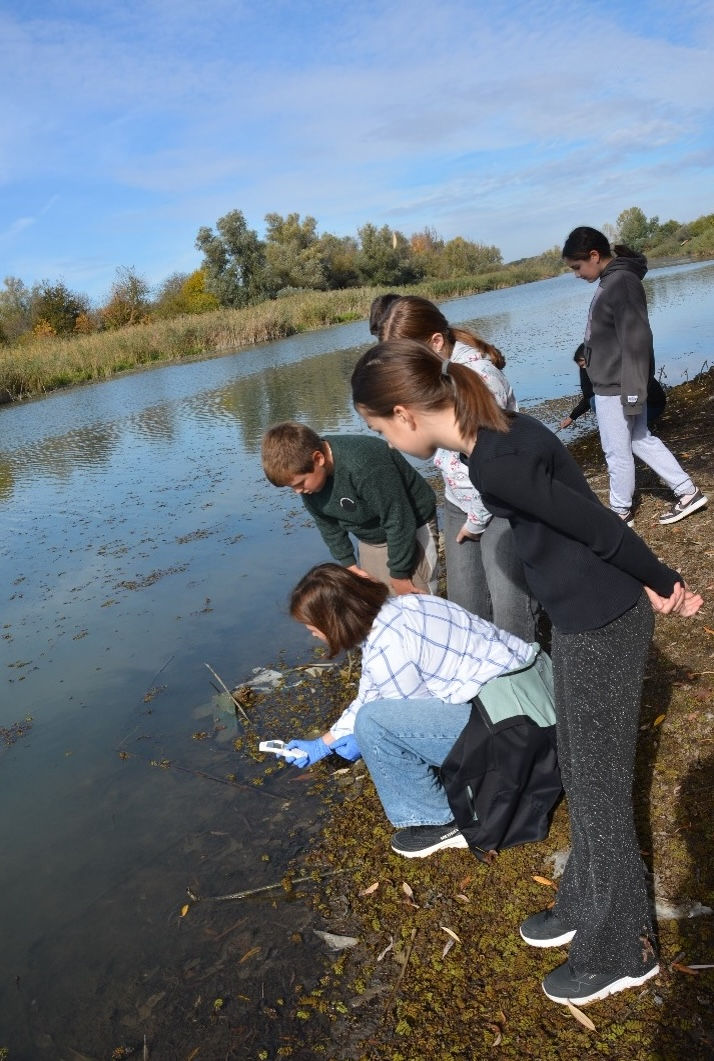
Several WP5 activities brought citizens directly to the river. Participatory River Walks encouraged learning through experience, combining local knowledge with scientific perspectives. We are delighted to see how this initiative has been spread by partners throughout the project, with colleagues at in Belgrade having produced several successful outreach and engagement events during the year, including a recent river walk in Belgrade as well as a November workshop at Primary School “Bora Lazić” (Vlaška) for 6th- and 8th‑grade students who are participating in the Twinning project “Waterwise: Building Climate-Resilient Futures”.
BioBlitz events on invasive alien species turned participants into citizen scientists, supporting biodiversity monitoring while raising awareness of ecological pressures. For a second year, DANUBE4all participated in a BioBlitz survey on invasive alien species (IAS) with the help of citizen science, intended for both professionals and amateurs, as part of Alien CSI BioBlitz initiative, organised at European level. You can read more about this from our blog post earlier this year.
What’s Next?
WP5 also developed a broader framework for science communication and engagement, including concepts for exhibitions, public labs, interactive tools, and educational activities. These are brought together in an output 'A Concept Plan for Exhibition and Public Labs', which will be available early next year.
Through WP5, DANUBE4all demonstrates that restoring the Danube is not only a technical task, but a shared societal journey - one that starts with participation, creativity, and connection to the river.